

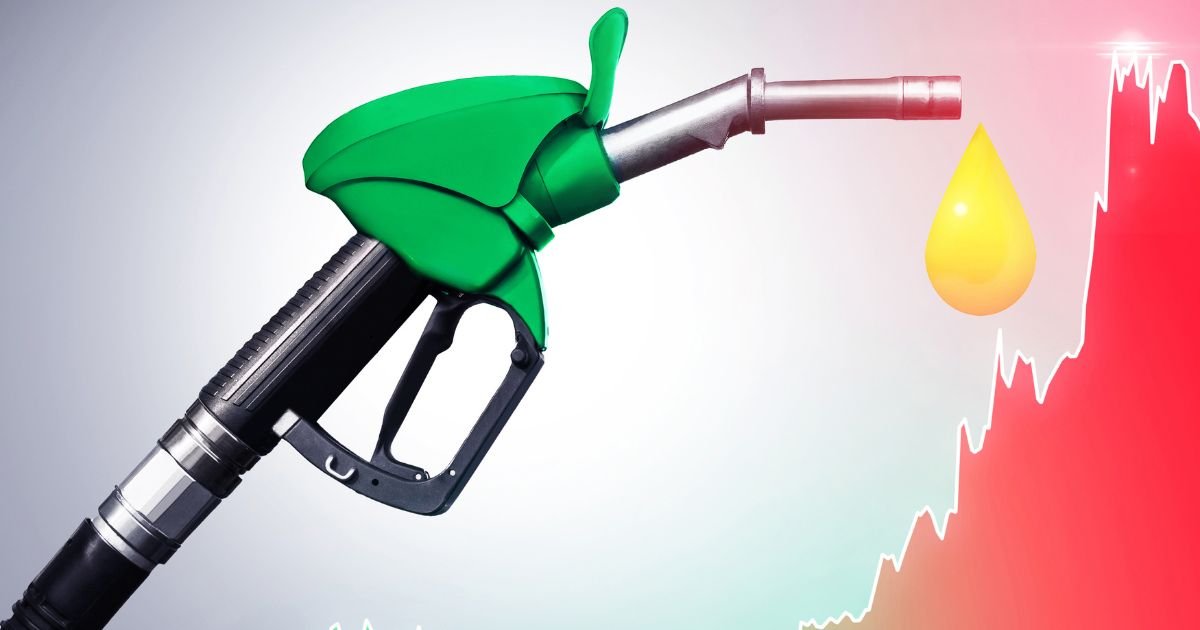
If you filled up your tank in February and again last week, you already know something feels off. The national average for regular gasoline hit $4.55 a gallon on May 7, 2026 — up roughly $1.50 from late February, according to AAA. That’s a 50% jump in about ten weeks.
I’ve been tracking AAA’s weekly fuel reports since the Strait of Hormuz crisis began, and the pattern is uglier than most explainers admit. This piece breaks down the four real forces pushing US petrol prices higher right now, what each one costs you per gallon, and when (realistically) you can expect relief.
No fluff. Just the mechanics.
What Actually Makes Up the Price You Pay at the Pump
A gallon of gas isn’t priced like a candy bar. It’s stacked from four cost layers, and each one moves on its own clock.
According to the US Energy Information Administration (EIA), the breakdown looks like this in normal years:
- Crude oil: ~50–55% of the pump price
- Refining: ~14–18%
- Distribution & marketing: ~12–15%
- Federal + state taxes: ~15–18% (federal tax sits at 18.40 cents/gallon, state taxes average 33.55 cents/gallon as of January 2026)
When any one of these layers spikes, your receipt feels it within days. Right now, three of the four are climbing at the same time — which is why pump shock feels worse than the headlines suggest.
A useful frame from Stanford economist Neale Mahoney: pump prices “shoot up like a rocket when crude oil rises but drift down like a feather when it falls.” Economists call this “rockets and feathers,” and it’s well-documented across decades of US gas data.
That asymmetry is half the reason these articles keep getting written.
The 4 Real Reasons Gas Prices Are Rising in 2026
1. The Strait of Hormuz Crisis Broke the Crude Supply Chain
The single biggest factor in 2026 is geopolitical. The Strait of Hormuz — the narrow chokepoint between Iran and Oman that carries roughly 20% of the world’s seaborne oil — has been effectively blocked since the Iran war started in late February.
The Brent crude price jumped above $100 per barrel within weeks. Some analysts at CU Boulder have floated $200/barrel scenarios if the strait stays closed through summer.
Even though the US is now a net oil exporter thanks to the shale boom, that doesn’t shield American drivers. Mahoney explains why: oil is priced on a global market, so if prices rise in Asia or Europe, US producers ship their barrels there to chase the higher price. American consumers end up paying world prices regardless of where the oil was pumped.
2. Refineries Can’t Refill the Pipeline Fast Enough
Crude oil isn’t gasoline. It has to be refined — and US refining capacity is actually shrinking in 2026.
Phillips 66 closed its Los Angeles refinery at the end of 2025. LyondellBasell shut its Houston refinery earlier. The result: fewer barrels per day moving through American refineries, which widens what traders call the “crack spread” (the gap between crude prices and wholesale gasoline prices).
EIA’s April 2026 outlook flagged this directly — refinery margins are pushing pump prices higher independent of crude. On the West Coast, this hits hardest. California drivers are paying an average of $6.06 per gallon as of early May 2026.
3. Seasonal Demand + Summer Blend Switchover
This one happens every year, and 2026 is no exception. From April through September, refineries are required to produce a cleaner “summer-blend” gasoline that reduces smog. It costs more to make and reduces output volume.
At the same time, Americans drive more in summer — vacation trips, road travel, longer commutes. Higher demand + tighter supply = higher prices. EIA noted in its April Short-Term Energy Outlook that “most of the increase in retail gasoline prices will be driven by the increased crude oil price and typical seasonal patterns.“
You’d see a 20–40 cent seasonal bump even in a calm geopolitical year.
4. A Weaker Dollar Makes Everything Worse
Here’s the factor most explainers skip. The US dollar depreciated about 10% from early January 2025 through April 2026, according to a Morgan Stanley analysis — its biggest first-half loss since 1973.
Oil is priced in dollars globally. When the dollar weakens, it takes more dollars to buy the same barrel of crude. So even if the underlying oil market were calm, Americans would still be paying more at the pump just because of the currency math.
This is invisible to most drivers but it’s quietly stacking another 15–25 cents onto every gallon.
Real 2026 Data: What Drivers Are Actually Paying
Here’s the snapshot from AAA Fuel Prices as of mid-May 2026:
| Metric | Value |
|---|---|
| US national average (regular) | $4.55/gallon |
| One year ago | $3.17/gallon |
| Pre-war (Feb 27, 2026) | $2.98/gallon |
| California (highest) | $6.06/gallon |
| Cheapest states (Gulf region) | $3.60–$3.85/gallon |
Regional variation is severe. Ohio, Michigan, and Indiana saw 20%+ jumps in a single week in early May, per US News reporting. Florida and Arizona saw less than 2% weekly increases in the same window.
Why such a gap? It comes down to which refineries serve which region, state tax rates (California’s hits 68.1 cents/gallon), and proximity to Gulf Coast refining hubs. If you live in the Midwest near a refinery outage, you feel every shock. If you live near Houston, you barely notice.
Kevin Book, co-founder of ClearView Energy Partners, told NPR in early May: “When inventories are low and you can’t get oil out of the ground or out of the strait, you should expect prices to keep rising at least until demand capitulates and starts to contract.“
In plain English: prices keep climbing until people stop driving.
Common Myths About Rising Gas Prices
Myth 1: “The President controls gas prices.” Mostly false. Presidents can release the Strategic Petroleum Reserve or adjust drilling permits, but global crude markets, OPEC decisions, and geopolitical shocks dwarf those levers. No US administration controls the Strait of Hormuz.
Myth 2: “More US drilling means cheaper US gas.” Partially false. The US is the world’s largest oil producer, yet gas hit $4.55. Why? Because oil sells at global prices. American producers ship barrels wherever demand is highest. Domestic production helps US energy security; it does not insulate pump prices.
Myth 3: “Oil companies are price-gouging in real time.” Mostly false in the way people mean it. Refineries do widen margins when supply is tight (that’s the crack spread), but the bigger story is structural: closed refineries, blocked shipping lanes, weak dollar. Gouging accusations get political attention but explain a small slice.
Myth 4: “Gas will drop the moment the war ends.” False — and this is critical. Mahoney’s analysis is blunt: even after the Strait of Hormuz reopens, oil fields and refineries need weeks to restart, inventories need to rebuild, and the rockets-and-feathers pattern means retail prices fall slowly even when crude crashes. Expect months, not days.
Frequently Asked Questions
Q: When will US gas prices go back down in 2026? Most analysts expect partial relief by late summer or fall 2026, if the Strait of Hormuz reopens. EIA’s earlier January forecast projected a 6% annual decline for 2026, but that was before the war. Realistically, returning to pre-war prices near $3.00 could take 4–8 months after the conflict resolves.
Q: Why is California gas so much more expensive than the rest of the US? California requires a unique low-emission fuel blend, has the highest state gas taxes in the country (68.1 cents/gallon), and recently lost refinery capacity with the Phillips 66 Los Angeles closure. Combined, these factors add roughly $1.50–$2.00 per gallon versus Gulf Coast states.
Q: Does the US import most of its oil? No — not anymore. The shale revolution made the US a net oil exporter by 2020. However, oil still trades on a global market, so American production levels don’t directly determine American pump prices. Global supply and demand do.
Q: How much of gas prices is taxes? On a $4.55/gallon national average, federal and state taxes combine to roughly 52 cents per gallon (about 11–12% of the total). California’s combined taxes hit nearly 90 cents/gallon. Taxes are a real factor but rarely the swing variable in short-term price spikes.
Q: Can switching to an electric vehicle protect me from gas price shocks? Yes, mostly. EV owners charging at home pay relatively stable electricity rates and avoid pump volatility entirely. Industry data suggests average EV home-charging savings of roughly $81/month versus gasoline vehicles, though savings vary by state electricity prices.
Q: What’s the cheapest way to save on gas right now? Three practical moves: use apps like GasBuddy or Upside to find the lowest local price (which can vary 30–50 cents within a single zip code), combine errands into one trip instead of multiple short drives, and check whether your employer offers commuter benefits or mileage reimbursement. Small habits stack up.
Q: Is gas more expensive now than during the 2022 spike? Not yet, on an inflation-adjusted basis. Gas hit a nominal $5.00/gallon in mid-2022, which would equal roughly $5.45 in 2026 dollars. The current $4.55 average is high but still below the 2022 real peak. Whether 2026 surpasses 2022 depends on how long the Strait stays closed.
The Bottom Line
US petrol prices are rising in 2026 because four forces are stacking at once: a major geopolitical supply shock at the Strait of Hormuz, shrinking US refinery capacity, normal summer demand patterns, and a weakened dollar that quietly raises every barrel’s cost in dollar terms.
None of these resolve quickly. Even when the Iran conflict ends, the rockets-and-feathers pattern means relief at the pump will come slowly.
Your action step: bookmark gasprices.aaa.com and check it weekly. If you commute long distances or drive a low-MPG vehicle, the savings from price-comparison apps (GasBuddy, Upside) can offset 20–40 cents per gallon — meaningful money when prices stay elevated through summer.
Watch the Strait. Watch the dollar. Those two indicators will tell you more about next month’s pump price than any political headline.
Lost in the noise? Cut through it with our curated wisdom packed with straight-to-the-point advice.
