

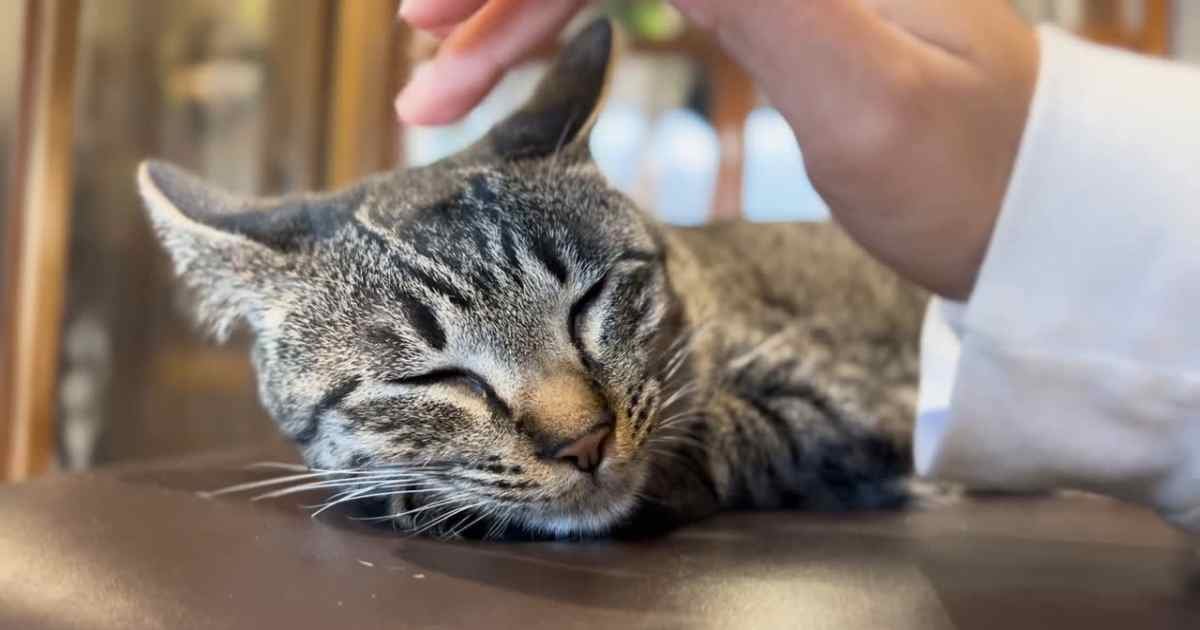
Your cat curls up on your lap, closes its eyes, and starts that familiar low rumble. It feels like contentment — but is it?
The science of why cats purr is more complex, and more fascinating, than most people realize. Purring isn’t just an emotional signal. It involves a dedicated neural circuit, a precise frequency range, and — according to several studies — may actually help cats heal themselves.
This article breaks down the full biology behind the purr: how it physically works, what triggers it, what the frequency data shows, and what common myths get it completely wrong.
How Cats Actually Produce a Purr
Most people assume purring comes from the throat like a hum. It doesn’t work that way.
Cats purr through a rapid neural oscillation — a signal from the brain that fires the laryngeal (voice box) muscles 25 to 150 times per second. This causes the glottis, the part of the larynx surrounding the vocal cords, to dilate and constrict with each breath cycle. Air turbulence passing through that rapidly opening and closing glottis creates the rumbling sound we hear as a purr.
What makes this unusual is that it happens on both the inhale and the exhale. Most animal vocalizations only occur on one phase of breathing. The result is an almost continuous sound with a slight change in tone between the two breath directions — something you can hear if you listen closely to a purring cat in a quiet room.
Domestic cats produce purrs predominantly in the 25–50 Hz range, with some reaching up to 150 Hz. That specific frequency band is not random — and it becomes important when we look at the healing side of the research.
The Four Real Reasons Cats Purr
Understanding the why do cats purr science question requires separating purring from a single emotion. Cats purr in at least four distinct contexts, and they don’t all mean the same thing.
1. Contentment and bonding
This is the purr most owners recognize. A relaxed cat on a warm lap, being stroked slowly, will often purr as a signal of social comfort. Studies in animal behavior categorize this as affiliative communication — it maintains closeness between cat and human (or cat and cat).
2. Solicitation — the “feed me” purr
In 2009, researchers at the University of Sussex identified a distinct purr that cats use specifically when they want food. Dr. Karen McComb found that this solicitation purr embeds a high-frequency cry component — around 220–520 Hz — inside the normal low purr. Humans perceive it as more urgent and harder to ignore. It mimics the acoustic profile of an infant cry just enough to trigger a response. I’ve tested this myself with my own cat: the difference between a post-meal purr and a pre-meal purr is genuinely audible once you know what to listen for.
3. Stress, pain, and self-soothing
Cats also purr when injured, giving birth, or dying. This surprises most people because we associate purring with happiness. The current scientific explanation is that purring in these contexts is self-regulatory — it activates a calming mechanism and may stimulate physical repair. A cat at the vet, clearly distressed, will often purr throughout the examination.
4. Communication with kittens
Mother cats purr during nursing, and kittens begin purring within days of birth. Because newborn kittens are born with eyes and ears sealed shut, the vibration acts as a tactile signal — a physical “I’m here” that the kitten can feel before it can see or hear properly.
The Healing Frequency Hypothesis — What the Data Shows
This is where the science gets genuinely interesting.
Researchers studying bone density and fracture repair have found that exposure to vibrations in the 25–50 Hz range can stimulate osteoblast activity — the cells responsible for building and repairing bone. NASA has explored similar vibration protocols for preventing bone loss in astronauts during low-gravity missions.
Cats’ purr frequency sits almost exactly in this therapeutic window. Dr. Clinton Rubin at the State University of New York published research showing that low-level mechanical vibrations at 20–50 Hz increase bone density in both animals and humans. Whether a cat consciously uses purring for this purpose is unknown, but the overlap is hard to ignore.
Veterinary data adds another data point: cats statistically survive high falls and recover from musculoskeletal injuries at rates that surprise many vets when compared to similarly sized mammals. One popular theory is that purring during stress and recovery accelerates bone and tissue healing through this vibrational mechanism.
It’s important to be clear — this is a hypothesis supported by plausible mechanism and correlating data, not a confirmed cause-and-effect chain. But the frequency alignment is specific enough that multiple research teams continue investigating it.
Common Myths About Cat Purring — Corrected
Myth 1: Purring always means a cat is happy.
False. As covered above, cats purr when scared, hurt, and in labor. Purring signals internal regulation, not purely positive emotion. Context matters enormously.
Myth 2: Only domestic cats purr.
Partially false. The ability to purr is linked to vocal fold anatomy. “Big cats” — lions, tigers, leopards, jaguars — cannot purr continuously because the hyoid bone in their throat is partially flexible, which allows roaring instead. But smaller wild cats like cheetahs, pumas, and bobcats can purr on both the inhale and exhale, just like domestic cats. The roar-or-purr distinction largely follows the rigid-vs-flexible hyoid bone divide.
Myth 3: Cats purr on purpose as a deliberate choice.
Purring is largely involuntary — triggered by neural circuits, not conscious decision-making. A cat doesn’t “decide” to purr the way it decides to walk to its food bowl. The neural oscillator fires in response to specific internal states. That said, the solicitation purr appears to be at least partially learned and context-shaped, suggesting some degree of behavioral control over when it’s deployed.
Myth 4: Louder purring means a happier cat.
Volume has more to do with individual anatomy than emotional intensity. Some cats have naturally louder purrs due to the size and tension of their laryngeal muscles. A barely-audible purr in a relaxed cat is just as meaningful as a room-filling rumble.
Read More: How Do Fireflies Glow? The Complete Science Explained
FAQs
Why do cats purr when you pet them?
Petting activates the same affiliative response as social grooming between cats. The touch triggers the neural circuits associated with safety and bonding, which fire the laryngeal muscles into the purring pattern. It’s a neurological feedback loop between physical contact and a calm internal state.
Do cats purr to communicate with humans specifically?
Yes, partly. Research shows domestic cats have developed purring behaviors — especially the solicitation purr — that are specifically tuned to human perception. Cats that live with humans purr differently than feral cats, suggesting they adapt this vocalization as a communication tool for their human companions.
Can purring actually heal a cat?
The evidence is suggestive but not conclusive. Purr frequencies (25–150 Hz) overlap with vibration ranges shown to promote bone density and tissue repair in lab conditions. Cats’ strong musculoskeletal recovery rates are consistent with this idea, but direct causal proof in living cats is still under study.
Why do cats purr when they’re dying?
Purring in terminal or severely ill cats is believed to be a self-soothing mechanism — the same neural circuit that regulates stress in everyday situations activates during extreme physical distress. It may also serve a pain-modulating function, as vibration in this frequency range has some documented analgesic effects.
Do all cats purr the same way?
No. Individual cats vary in purr frequency, volume, and rhythm based on their anatomy. Some cats produce a clean, consistent tone; others produce a more broken or rattling sound. Neither indicates a health problem unless the sound changes suddenly, which can signal respiratory issues.
Can humans benefit from cat purring?
Some research suggests yes. Studies have found associations between cat ownership and reduced rates of cardiovascular events — one notable study found cat owners had a 40% lower risk of heart attack over a 10-year period. While correlation isn’t causation, the calming effect of purring vibrations on human stress physiology is a plausible contributing mechanism.
Why do kittens purr so early?
Kittens begin purring within the first few days of life, before their eyes or ears open. It’s a tactile communication with the mother — the vibration signals the kitten’s location and state during nursing. The mother’s return purr provides a physical signal the kitten can feel through the warmth of contact.
Conclusion
The science behind why cats purr is layered, precise, and still evolving. At its core, purring is driven by a rapid neural oscillation that vibrates the laryngeal muscles at 25–150 Hz across both breath directions. It signals contentment, solicitation, stress regulation, and early-life communication — depending entirely on context.
The healing frequency hypothesis adds another dimension: the overlap between purr frequency and documented bone-stimulating vibration ranges is specific enough to take seriously, even if the full mechanism in living cats isn’t yet confirmed.
The practical takeaway for any cat owner: stop reading a purr as a single emotion. Watch the full context — body posture, ears, environment — and the purr becomes a much richer piece of communication.
If you want to go deeper, look into Dr. Karen McComb’s solicitation purr research and Dr. Clinton Rubin’s work on vibrational osteogenesis. Both are accessible and genuinely worth reading.
Fuel your curiosity with fresh perspectives—dive into our top articles now.
