








Modern automotive body repair has moved far beyond hammer and filler. Today’s vehicles use high-strength steels, aluminum alloys, bonded structural assemblies, and carefully engineered deformation zones. Exterior panels are not just cosmetic — they affect crash performance, aerodynamics, vibration control, and structural rigidity.
When a dent occurs, the damage goes deeper than surface appearance. Internal stress distribution changes, material thickness may reduce, and protective coatings can be compromised. A precision-based dent repair system restores both shape and structural balance through controlled mechanical and electrical processes.
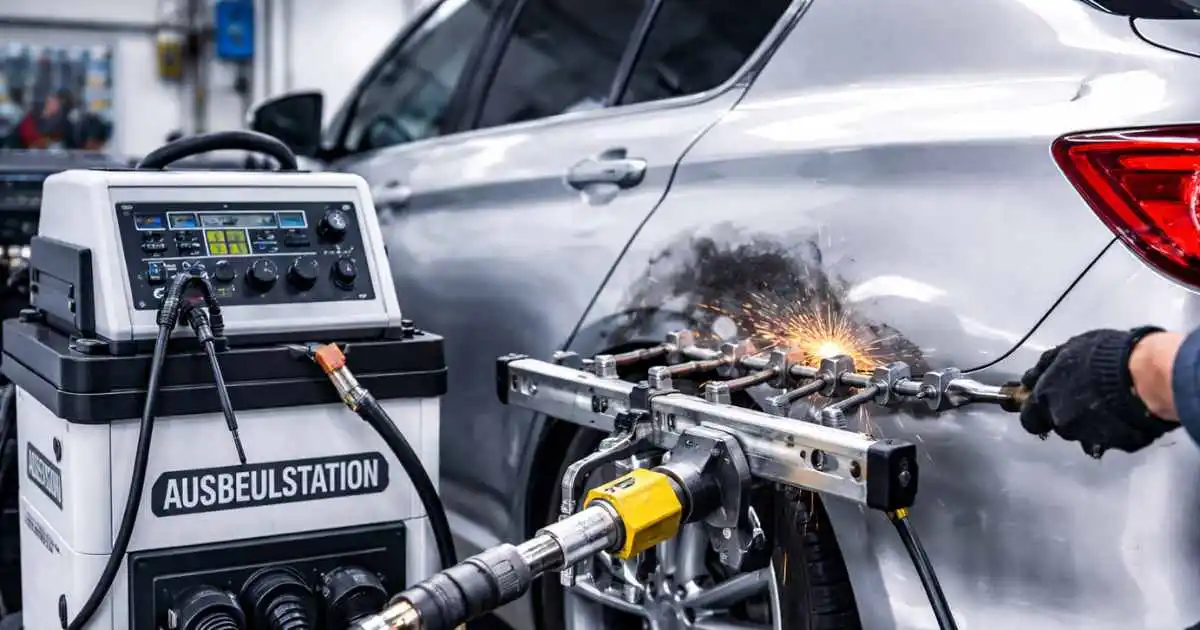
An Ausbeulstation provides this controlled environment. It enables gradual reshaping while preserving mechanical properties and long-term durability.
The Metallurgical Behavior of Metal During Impact
When a vehicle panel is hit, it moves from elastic deformation (temporary) to plastic deformation (permanent). At that point, the internal grain structure shifts and stress zones develop.
These stress concentrations stay active beneath the surface — even if the dent looks visually corrected. Forcing the metal back too aggressively can create hidden weaknesses. Over time, that leads to cracking, corrosion, or instability.
A structured dent correction process using an Ausbeulstation focuses on gradual stress redistribution. Progressive outward tension guides the material back toward equilibrium without adding new strain.
Key metallurgical factors:
- Internal tensile and compressive stress zones
- Localized thinning of material
- Microstructural grain displacement
- Surface tension imbalance
Understanding these is essential for durable repairs.
Structural Role of Exterior Panels in Vehicle Safety
Modern panels play a real role in energy absorption and load distribution during collisions. While primary crash loads go through chassis components, outer panels influence how force is transferred and dissipated.
Improper repair methods — such as excessive grinding — can reduce panel thickness and alter structural performance. Maintaining original geometry ensures the vehicle’s safety design remains intact.
An Ausbeulstation helps preserve panel geometry, which supports:
- Accurate door and hood alignment
- Consistent body gaps
- Stable airflow
- Reduced vibration
Structural and aerodynamic integrity both depend on careful correction techniques.
Precision Energy Regulation and Attachment Systems
A defining feature of a professional Ausbeulstation is regulated electrical attachment. Temporary studs are secured to the panel surface using digitally controlled energy output. This allows pulling tools to apply outward tension effectively.
Modern inverter systems provide control over:
- Welding current intensity
- Pulse duration
- Material-specific calibration
- Heat concentration
Controlled energy prevents overheating — particularly important for high-strength steel and aluminum panels. Stable grounding ensures consistent performance and safety.
Proper attachment strength enables effective reshaping while protecting surrounding surfaces from distortion.
Progressive Mechanical Tension and Force Control
Once attachment points are secured, an Ausbeulstation uses mechanical pulling tools to apply gradual tension. Unlike traditional hammering — which introduces sudden impact force — progressive pulling distributes tension evenly across the affected area.
Multi-point pulling bridges are used for wide dents, while localized pulling tools address concentrated impact zones. Controlled force application reduces overstretching and ensures smoother contour recovery.
Mechanical advantages of an Ausbeulstation include:
- Balanced stress redistribution
- Controlled panel movement
- Reduced need for filler
- Improved dimensional accuracy
- Preservation of coating layers
Gradual reshaping leads to more predictable and stable results.
Structured Professional Repair Workflow with Ausbeulstation
High-quality dent restoration begins with assessment. Technicians evaluate dent depth, material composition, reinforcement proximity, and paint condition. Reflection lighting is often used to detect subtle distortions.
Surface preparation follows inspection. The panel is cleaned, grounding clamps are secured, and attachment points are positioned strategically using the Ausbeulstation.
Reshaping is performed incrementally. Multiple small adjustments are preferred over one aggressive correction. After contour restoration, attachment points are removed and surface symmetry is verified.
A disciplined workflow typically includes:
- Detailed inspection
- Surface preparation
- Strategic attachment placement
- Progressive reshaping via Ausbeulstation
- Final alignment verification
This structured method ensures repeatable and professional outcomes.
Adaptability to Modern Multi-Material Construction
Contemporary vehicles often combine steel, ultra-high-strength steel, aluminum, and composite materials. Each material requires specific handling.
A modern Ausbeulstation offers material-sensitive calibration:
- High-strength steel → protection from excessive heat
- Aluminum → lower energy input and gradual reshaping
- Composite panels → compatible with adhesive-based methods
Material-sensitive techniques preserve:
- Corrosion-resistant coatings
- Reinforcement integrity
- Structural bonding strength
- Safety-critical zones
Adaptability across materials ensures compatibility with electric vehicles and advanced lightweight designs.
Operational Efficiency and Business Advantages
An Ausbeulstation improves workflow organization and reduces repair cycle times. Centralized equipment minimizes downtime between tasks and increases technician productivity.
Reduced filler use and limited repainting lower material costs. Improved accuracy decreases the likelihood of rework and customer complaints.
Operational benefits include:
- Faster repair turnaround
- Reduced labor strain
- Consistent repair quality
- Lower consumable expenses
- Increased workshop capacity
These efficiencies contribute to long-term profitability and competitive advantage.
Maintenance, Calibration, and Professional Standards
Routine maintenance of your Ausbeulstation ensures stable performance. Electrical connections, welding tips, and cooling systems should be inspected regularly. Proper calibration maintains consistent energy output.
Preventive care supports:
- Reliable attachment strength
- Stable mechanical tension
- Long equipment lifespan
- Safe operation
Equally important is technician training. Skilled operators understand how to manage tension levels, adjust energy settings, and interpret material behavior accurately.
Conclusion
An Ausbeulstation represents a shift from cosmetic correction to structural rehabilitation. By combining regulated energy control with progressive mechanical tension, this precision dent repair system restores damaged panels while preserving their mechanical properties.
As automotive engineering continues to advance, repair methods must evolve accordingly. Workshops that adopt an Ausbeulstation position themselves for improved safety compliance, operational efficiency, and long-term success.
What’s new, now—dive into top content that keeps you informed.