

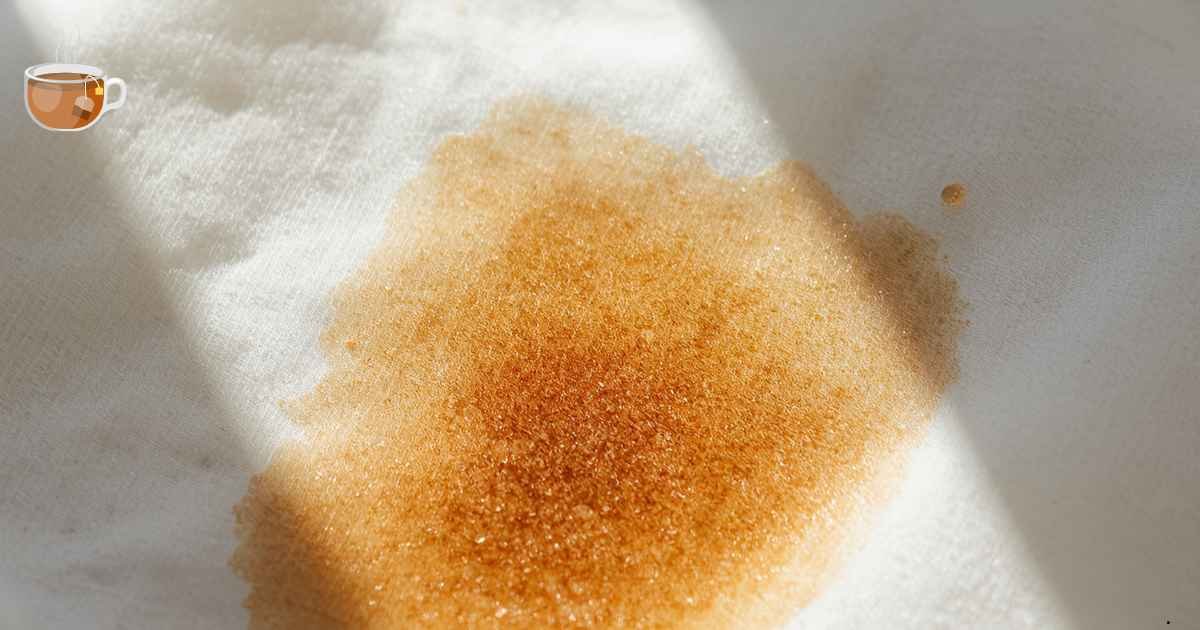
Tea stains are one of the most common laundry problems in American homes and one of the most misunderstood. Bleach is the default recommendation online, but bleach damages colored fabrics, weakens fibers, and is not safe for many synthetic blends. Fortunately, tea stains respond well to gentler home treatments if you catch them at the right time.
I have removed tea stains from white shirts, colored blouses, silk scarves, and my daughter’s school uniform over the last decade of daily tea drinking. The methods below work when used correctly and in the right order.
This guide covers six proven ways to remove tea stains from clothes without bleach, ranked by stain age and fabric type. No harsh chemicals, no expensive stain removers, no risk to colored fabrics.
Why tea stains without bleach: the science
Tea contains tannins, natural plant compounds that bind to protein fibers (wool, silk) and cellulose fibers (cotton, linen). Once set, tannins create the yellow-brown discoloration everyone recognizes.
Bleach breaks down tannins effectively, but it does the same to fabric dyes and can weaken fibers over repeated use. The American Cleaning Institute specifically recommends alternative approaches for colored garments and delicates precisely because chlorine bleach damages more than the stain.
Gentler alternatives (baking soda, white vinegar, lemon juice, dish soap, hydrogen peroxide) all work through different mechanisms. Baking soda absorbs and lifts stains. Vinegar dissolves the tannins acidically. Dish soap breaks the tannin-fabric bond through surfactant action. Choose based on your fabric and stain age.
Fresh tea stains respond to any method with 95%-plus success. Set-in stains (24 hours plus) require more aggressive treatment but are still removable in most cases.
The 6 best home methods to remove tea stains without bleach
Ranked by effectiveness and safety across fabric types.
1. Cold water rinse (first response, works on all fresh stains)
The single most important step is often the one people skip. The moment tea spills, rinse the stained fabric under cold running water from the back of the fabric for 60 to 90 seconds.
Cold water pushes the tannins back out the way they came in. Never use hot water on tea stains. Hot water sets the tannins permanently within 5 to 10 minutes.
Success rate: 60% to 80% of fresh stains disappear entirely with cold water alone.
2. Baking soda paste (best for white and light fabrics)
Mix 3 parts baking soda with 1 part cold water into a thick paste. Apply directly to the stain, cover the entire affected area, and let sit for 15 to 20 minutes. Rinse with cold water and wash normally.
Best for: White cotton, linen, and light-colored fabrics. Safe for most delicate fabrics but always spot-test first.
Success rate: 85% on stains under 6 hours old, 60% on stains 6 to 24 hours old.
3. White vinegar + dish soap (best for colored fabrics)
Mix 1 tablespoon white vinegar, 1 tablespoon dish soap, and 2 cups cold water. Apply to the stain, gently blot with a clean white cloth from the outside in, and let sit for 20 to 30 minutes. Rinse and wash.
Best for: Colored cotton, blends, and everyday clothes. The vinegar sets colors and lifts the stain without bleaching.
Success rate: 80% on stains under 24 hours old.
4. Lemon juice + salt (best for white delicates like silk)
Squeeze fresh lemon juice directly on the stain. Sprinkle table salt over the wet spot to form a paste. Let sit in indirect sunlight for 30 to 60 minutes. Rinse with cold water.
Best for: White or cream silk, linen, and delicate cotton. The natural bleaching action of lemon juice + sunlight is gentle enough for silk.
Warning: Never use on colored silk. Lemon can lift dyes.
Success rate: 75% on white delicate fabrics with stains under 12 hours old.
5. Dish soap + hydrogen peroxide (best for set-in stains on white)
Mix 1 tablespoon liquid dish soap with 3 tablespoons 3% hydrogen peroxide (the standard drugstore concentration). Apply to the stain, let sit for 30 minutes to 1 hour, then rinse and wash.
Best for: Set-in tea stains on white cotton, poly-cotton blends, or synthetic fabrics.
Warning: Spot-test on colored fabrics first. Hydrogen peroxide can lighten dyes over time.
Success rate: 70% on stains 24 hours to 3 days old.
6. Enzymatic laundry pre-treatment (best for stubborn old stains)
Products like OxiClean, Zout, or Puracy enzyme cleaner contain enzymes that break down tannins specifically. Spray directly on the stain, let sit 15 to 60 minutes, then wash in cold water.
Best for: Tea stains that have been through the dryer at least once. Also works on tea rings on collars and cuffs.
Success rate: 85% on stains up to a week old.
Fresh vs set-in tea stains: what to use when
Timing matters more than technique. Here is the guide by stain age.
| Stain Age | Best Method | Success Rate |
|---|---|---|
| 0-5 minutes | Cold water rinse alone | 60-80% |
| 5 min – 6 hours | Baking soda paste OR vinegar + dish soap | 85% |
| 6 – 24 hours | Vinegar + dish soap OR lemon + salt | 75% |
| 24 hours – 3 days | Dish soap + hydrogen peroxide | 70% |
| 3+ days (already washed) | Enzymatic pre-treatment + repeat wash | 60% |
| Through the dryer | Enzymatic pre-treatment (2-3 cycles) | 50% |
The most important rule: never put a tea-stained garment through the dryer. Heat sets tannins permanently. Air-dry until the stain is fully removed.
Step-by-step: removing a fresh tea stain in under 5 minutes
Step 1: Immediately rinse the back of the fabric under cold running water for 60 to 90 seconds. Pushing water through from the back forces the tannin out rather than deeper into the fabric.
Step 2: Assess whether the stain is mostly gone. If it is, wash normally in cold water.
Step 3: If a visible mark remains, apply the appropriate method for your fabric. Baking soda paste for whites and lights, vinegar + dish soap for colored fabrics, lemon + salt for silk.
Step 4: Let the treatment sit for 15 to 30 minutes.
Step 5: Rinse under cold water again. If the stain persists, repeat the treatment. Do not move to hot water or the dryer.
Step 6: Wash normally on the coldest setting the fabric allows. Air-dry the garment.
Step 7: Check the stain in bright light before deciding it is fully removed. Sometimes stains look gone when wet but reappear as the fabric dries.
Common mistakes that make tea stains worse
Using hot water first. Hot water sets tannins permanently. Cold water only, until the stain is gone.
Rubbing the stain aggressively. Rubbing spreads the stain and can damage fibers. Blot instead of rubbing.
Applying stain remover to dry fabric. Wet the fabric with cold water first for better penetration.
Drying before the stain is fully removed. Heat from the dryer bonds any remaining tannin to the fabric. Air-dry until the stain is clearly gone.
Skipping the spot-test on colored fabrics. Vinegar, lemon juice, and hydrogen peroxide can affect dyes. Always test on a hidden seam first.
Using multiple methods simultaneously. Mixing baking soda + vinegar in a paste neutralizes both. Use one method at a time.
Assuming the stain is gone before checking dry. Wet fabric hides stains. Always check under bright light after drying.
Fabric-specific tea stain removal guide
White cotton: Baking soda paste first, then dish soap + hydrogen peroxide if needed. Both are safe.
Colored cotton: Vinegar + dish soap is safest. Avoid lemon juice and hydrogen peroxide.
Silk: Lemon juice + salt in indirect sunlight for whites. For colored silk, dish soap + cool water only. Take valuable silk to a dry cleaner if the stain persists.
Wool: Cold water rinse + gentle dish soap only. Wool is delicate and reacts poorly to acidic treatments.
Polyester and synthetic blends: All methods work. Enzymatic pre-treatment is often the fastest.
Linen: Same as cotton, but avoid harsh scrubbing which can damage the weave.
Denim: Vinegar + dish soap is safest. Bleach alternatives sometimes lighten indigo dye.
When to accept the stain or seek professional help
Some tea stains cannot be fully removed at home. Signs it is time to try a professional:
- Stain persists after 3 rounds of appropriate at-home treatment
- The garment is silk, wool, or another delicate fabric worth over $100
- The stain has been through the dryer 2 or more times
- The fabric has visible fiber damage or discoloration around the stain
Professional dry cleaners have access to solvents and specialized enzyme treatments unavailable to home consumers. Expect to pay $8 to $20 for stain treatment on a single garment.
For older stains on cheaper garments, sometimes accepting the fade is the smarter choice. Undershirts, work clothes, and everyday items rarely justify hours of stain treatment.
Frequently asked questions
Can you remove old tea stains from clothes?
Yes, though success rates drop with time. Stains 3 to 7 days old respond to dish soap + hydrogen peroxide treatments with roughly 70% success. Stains that have been through the dryer are harder but often still removable with enzymatic pre-treatments used across 2 to 3 wash cycles. Old set-in stains sometimes require professional cleaning.
Does baking soda really remove tea stains?
Yes. Baking soda paste (3 parts baking soda to 1 part water) applied for 15 to 20 minutes removes 85% of fresh tea stains on white and light fabrics. The mild abrasion combined with alkaline pH lifts tannins from cotton and linen effectively without damaging fibers.
What is the fastest way to get a tea stain out of white clothes?
Immediate cold water rinse followed by baking soda paste for 15 minutes. This combination removes 90%-plus of fresh tea stains on white cotton within 20 minutes total. For stubborn residue, follow with dish soap + hydrogen peroxide for another 30 minutes before washing.
Will vinegar remove tea stains?
Yes, especially on colored fabrics. Mix 1 tablespoon white vinegar with 1 tablespoon dish soap and 2 cups cold water. Apply, blot, and let sit for 20 to 30 minutes. The vinegar’s acidity dissolves tannins without bleaching dyes, making it the safest option for colored garments.
Can tea stains be permanent?
Only if treated incorrectly. Tea stains become permanent when exposed to hot water or dryer heat before removal. A stain that has been through 3 or more dryer cycles becomes very difficult to remove but is rarely truly permanent. Enzymatic pre-treatments applied across multiple cold wash cycles can still remove most heat-set stains.
Is hydrogen peroxide safe for colored clothes?
With caution. Hydrogen peroxide at 3% concentration is milder than chlorine bleach but can still lighten dyes on colored fabrics over time. Spot-test on a hidden seam first, use only when needed, and avoid extended exposure (over 30 minutes) on colored garments.
How do you remove tea stains from silk without damaging it?
For white silk, lemon juice + salt in indirect sunlight for 30 minutes works well. For colored silk, gentle dish soap + cool water only. Never use vinegar, hydrogen peroxide, or bleach on silk. Valuable silk items with persistent stains should go to a dry cleaner rather than risk home treatment.
Can I use dish soap alone to remove tea stains?
Yes for fresh stains. Rub a drop of dish soap into the stain after cold water rinse, let sit 10 to 15 minutes, then rinse. Dawn and other grease-cutting dish soaps work best because tea stains contain trace oils along with tannins. Success rate is around 70% on stains under 6 hours old.
Does salt help remove tea stains?
Yes, but only combined with an acid like lemon juice. Salt alone rarely removes stains. Salt paired with lemon juice creates a mild abrasive scrub that lifts tannins from delicate fabrics. Sprinkling salt on a fresh spill immediately can absorb some liquid before it sets, but it is not a standalone treatment.
Fix the tea stain right now
Tea stains are among the most treatable common laundry stains when caught early. Cold water within 5 minutes, followed by the right method for your fabric, removes most tea stains at home without bleach.
Right now: If you have a fresh tea stain, stop reading and rinse the fabric under cold running water for 60 seconds from the back. Then come back and pick the treatment matching your fabric type. Time matters more than technique for tea stains.
For future spills, keep a small container of baking soda, a bottle of white vinegar, and a bottle of 3% hydrogen peroxide in your laundry area. Together they cost under $8 and handle 90% of every stain your household will produce this year.
Ignite a new perspective—immerse yourself in our latest standout pieces right away.
